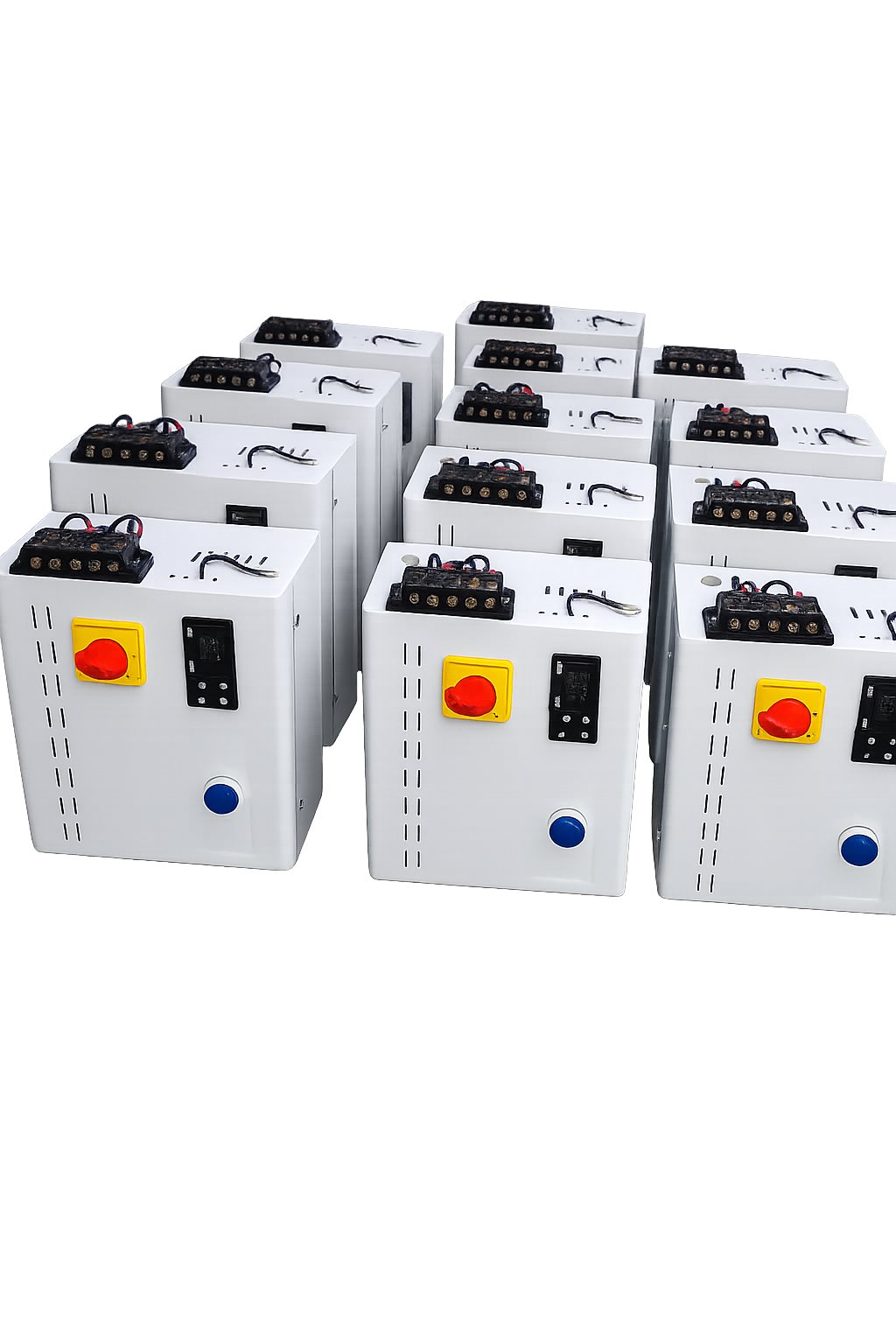
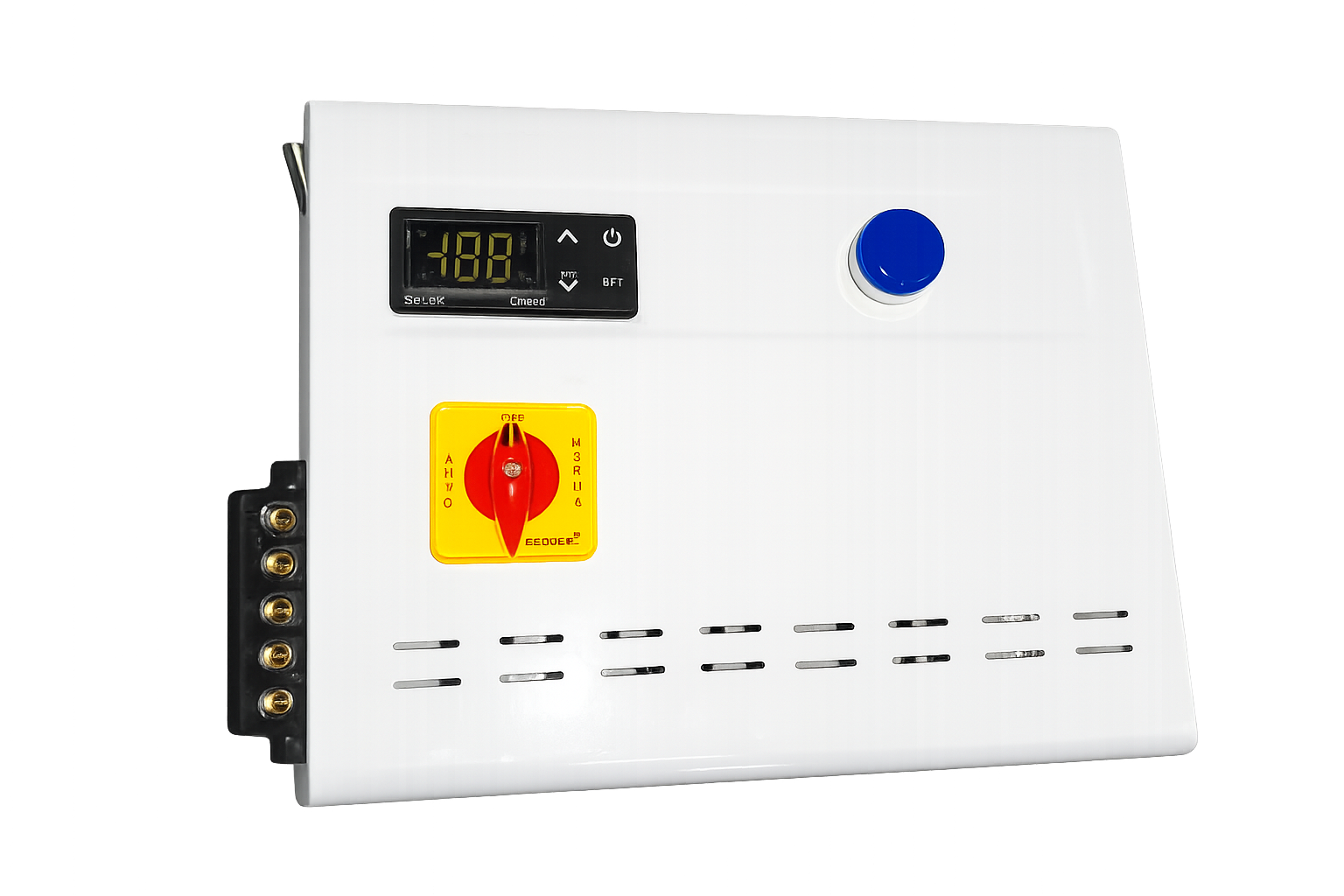
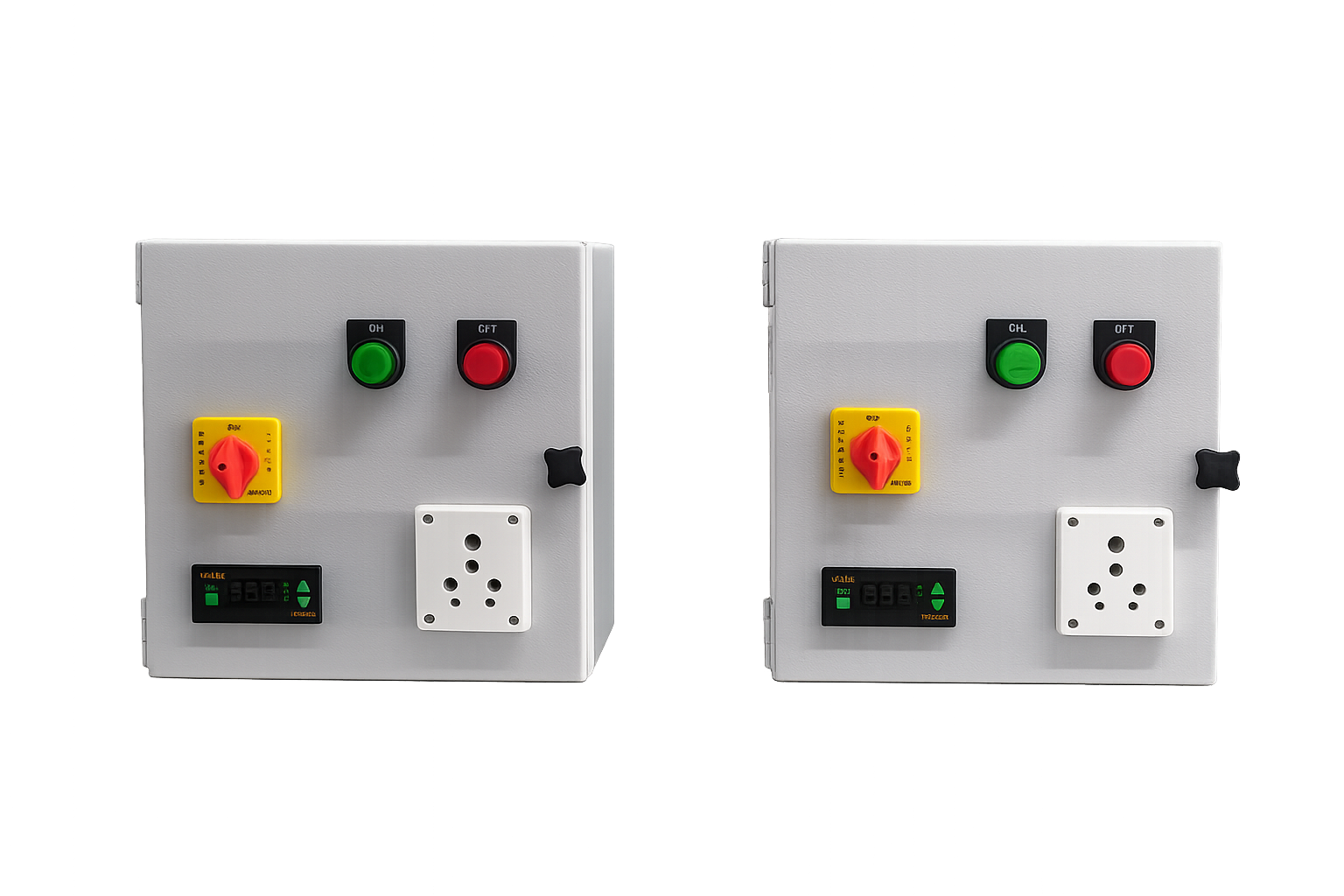
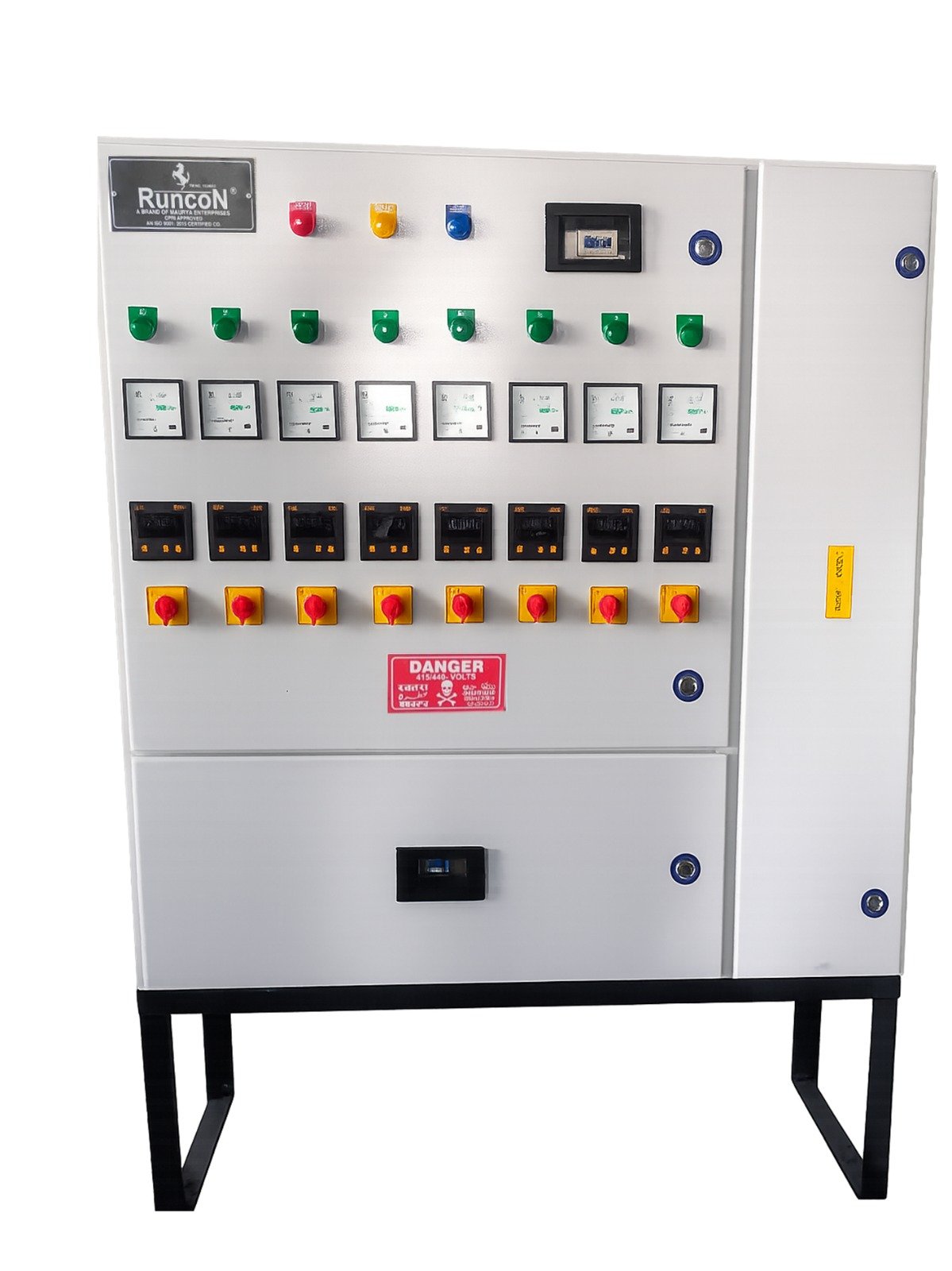
TEMPERATURE CONTROL PANEL
RuncoN Temperature Control Panel is an electrical panel designed to regulate and maintain the temperature of a process, equipment, or environment. These panels are widely used in industries where precise temperature control is critical to ensure product quality, safety, and efficiency.
Key Features of a Temperature Control Panel:
Temperature Controllers:
o Digital or analog controllers to monitor and maintain temperature.
o Types include ON/OFF, proportional, and PID controllers.
Sensors:
o Thermocouples or RTDs (Resistance Temperature Detectors) to measure temperature accurately.
Heating and Cooling Controls:
o Relays or contactors to activate heaters or cooling systems.
Alarm Systems:
o Alerts for over-temperature or under-temperature conditions.
User Interface:
o Displays or touchscreens for setting and monitoring temperature.
Programmability:
o Allows setting of temperature profiles for processes with varying heat requirements.
Components of a Temperature Control Panel:
Temperature Controllers: The core unit that receives input from sensors and sends control signals.
Sensors:
o Thermocouples: Cost-effective and suitable for a wide range of temperatures.
o RTDs: More accurate and stable for precise measurements.
Control Relays or Contactors: Switch heating or cooling elements based on control signals.
Power Supply Unit: Ensures the panel and connected devices receive the required power.
Cooling Fans: Prevents overheating within the panel itself.
Enclosure:
o Dustproof or waterproof enclosures for industrial or outdoor use.
Data Loggers (Optional):
o Record temperature data for analysis and quality control.
Working Principle:
Temperature Monitoring:
o Sensors detect the current temperature and send the signal to the controller.
Comparison and Adjustment:
o The controller compares the actual temperature with the setpoint.
o It triggers heating or cooling systems if there is a deviation.
Feedback Loop:
o Adjustments continue until the desired temperature is achieved and maintained.
Benefits of a Temperature Control Panel:
Precision: Maintains consistent temperatures for optimal process outcomes.
Energy Efficiency: Reduces energy waste by operating only when necessary.
Automation: Minimizes manual intervention, increasing efficiency.
Safety: Prevents overheating or undercooling, protecting equipment and products.
Customization: Tailored designs for specific industrial or commercial applications.
Applications:
Industrial Processes:
o Furnaces
o Ovens
o Plastic molding machines
HVAC Systems:
o Temperature control in buildings or cleanrooms.
Food and Beverage Industry:
o Maintaining temperature in cooking, cooling, or storage.
Pharmaceuticals:
o Controlled environments for drug production.
Cold Storage and Refrigeration:
o Ensuring safe temperatures for perishable goods.
Types of Temperature Control Panels:
Single-Zone Panels: Control the temperature of one area or process.
Multi-Zone Panels: Manage multiple temperature zones independently.
Advanced Panels:
o Include IoT-enabled features for remote monitoring and control.
o Equipped with PID controllers for highly accurate regulation.